The Infinite Among Us
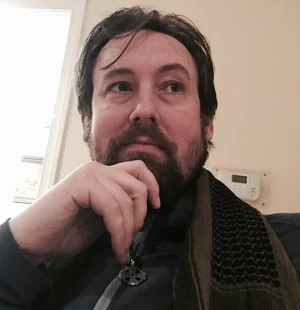
By The Rev. Christopher Johnson
“I’ve tried all the major religions and most of the minor ones. I’ve worshipped Buddha, Allah, Brahma, Vishnu, Siva, trees, mushrooms, and Isadora Duncan.”
— Annie Savoy, Bull Durham (1988)
The Search Begins
My spiritual reflection has to begin the same way. I’ve been interested in the spiritual for as long as I can remember—not always Christian, but always searching.
I was raised Methodist, sat in zazen groups in college, spent a weekend at a Buddhist temple in Toronto, another at a Tibetan retreat in Virginia, and I’ve spent time at a mosque. Even my undergraduate degree is in comparative religion.
I’ve spent a long time haunted by questions that wouldn’t let me go.
It wasn’t until I dove into the incarnational theologies of the Christian faith that I stopped searching. To paraphrase C.S. Lewis: if God became man and rose from the dead, it’s the most important thing in history. If He didn’t, then the whole thing is a lie, and we shouldn’t give it much thought.
There’s not much room for a middle stance. Many of us grow comfortable with faith because we’ve never risked examining it deeply. I can even admire those who walk away from Christianity—it’s a preposterous claim, after all. At least they’ve wrestled with it honestly.
To understand my spiritual awareness, you have to understand how I see the religious experience itself—and how I view the incarnational reality of Jesus Christ as the answer to the great religious question.
The Human Question
To me, the religious experience—for all people, not just Christians—is ultimately an attempt to answer the what and why of human existence.
Some of humanity’s earliest religious moments are bulls painted on cave walls: an attempt to make sense of the mystery of life, to thank or persuade the unseen source that sustains it. We didn’t know where that source came from, but we wondered, and we offered.
From there, our gaze lifted to the stars, and the pantheons of gods were born.
If you want to understand my religious awareness, you need to know this: I think everyone has a religious view—from the most evangelical Pentecostal to the most contemplative Zen monk to the most militant atheist. We’re all trying to make sense of the same cosmic question: Why are we here, and what does it mean?
Limits of Enlightenment
Over time, my spiritual awareness began to move from the general to the particular.
I reject the Enlightenment notion that human reason alone can comprehend all the universe holds. I don’t reject science—the scientific method is a gift for exploring the natural world. But when that same method is applied to human meaning, it tends to fracture us.
It divides people into smaller and smaller categories until we see each other as something foreign, alien.
I fear that’s where much of modernity has landed—disconnected, subdivided, restless.
And that restlessness in me is what propels me back toward the Christian proposal.
The Infinite Among Us
If the universe is too vast for my finite mind to grasp, then how do I begin to answer the “why”?
For me, the heart of the Christian faith offers the only satisfying response:
the Infinite has come among us. The Creator has entered creation.
I cannot know infinity unless infinity is clothed in humanity. This conviction shapes what I call a radical incarnational spirituality.
In Jesus Christ, the Infinite becomes the questioner. The One who made the stars becomes the one who asks why along with us. The Incarnation shows that the Infinite wants to be near its creation—to feel what we feel, to hurt and to love, even to die.
Through Christ’s life, we see not only what God is like but also how creation itself is meant to respond to pain, to joy, to love, and even to death.
The Infinite experiences us so that we might experience It.
In that exchange, the atonement is already assumed: for God to stay close to creation, God had to confront the greatest limitation of all—death. Through Christ’s self-offering on the cross, even dying becomes an act of divine generosity, a giving of self that redeems what it touches.
Love and Freedom
The one thing the Infinite cannot be is limited, so in death—which could only happen through the Incarnation—God experienced death but was not bound by it.
Death was the door through which God entered, but not the cage that could contain Him. In that act, death itself was undone, and creation was released from its hold.
From here, only two possibilities remain: either all are freed from death, or some still cling to it.
I’ve wrestled with the idea that everyone might be saved—and something in me still aches at the thought. But love, to me, has to allow a “no.” Even God’s.
True love must give us the freedom to refuse it, to say, “This isn’t who I am or where I am.” That’s what makes it real.
I do not pretend to know what an existence apart from God’s presence is like. Maybe it is simply standing before the fullness of love and realizing we have spent our lives turning from it. Maybe it’s the ache of knowing God exists, but choosing forever to look away.
Whatever that is, I know I don’t want it—and that awareness deepens my gratitude for the Incarnation itself.
The Presence That Remains
My spiritual awareness depends on the Incarnation continuing to have a living presence in our world.
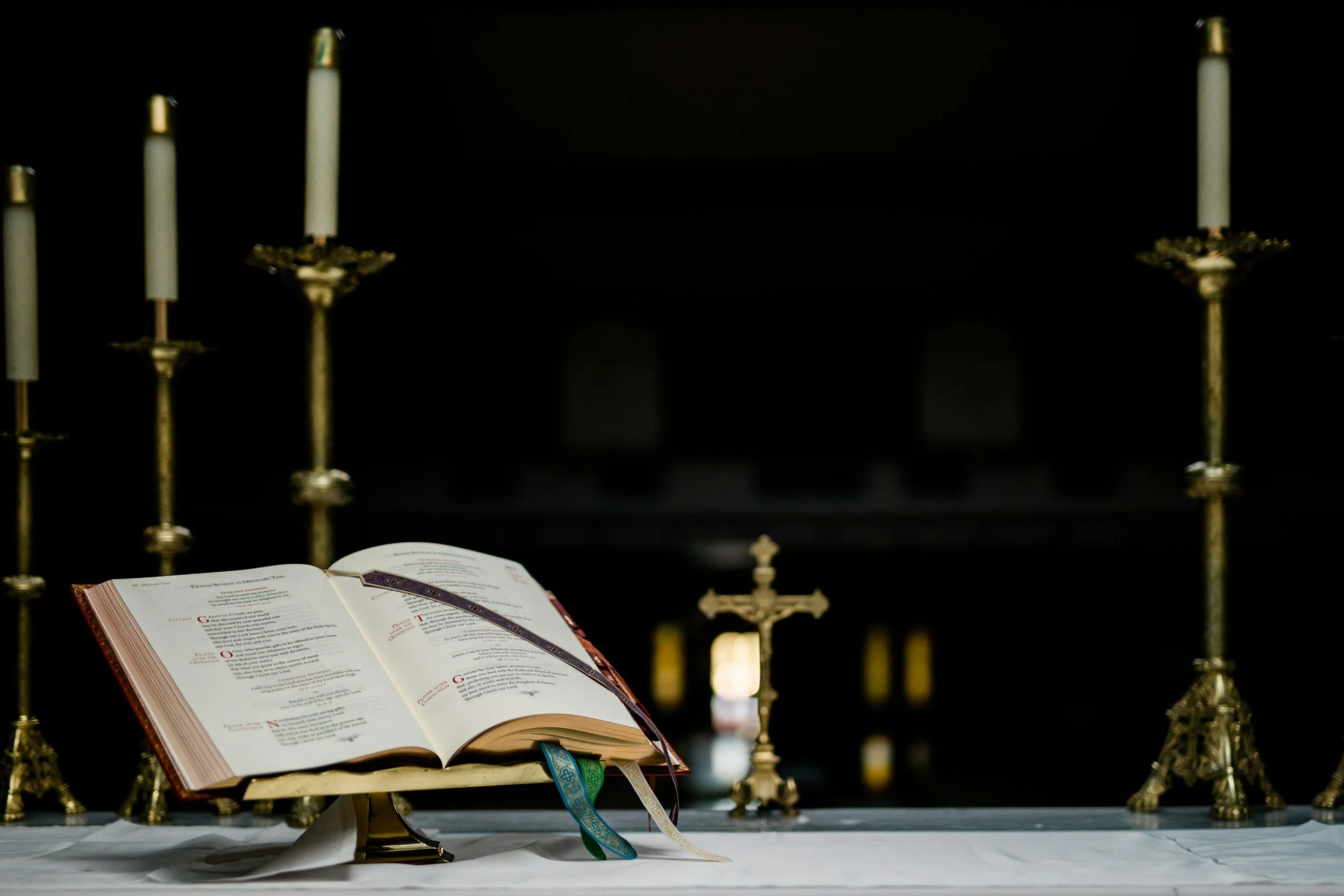
For me, that presence is most tangible in the Church, which is grafted to God through the life and work of Christ. It’s also made real through the Eucharist.
I can’t reduce that mystery to a formula like transubstantiation or symbolism alone. It’s something more—something like the mystery of the Incarnation itself, where divine and human are bound without confusion.
When I come to the altar, I try not to solve the mystery but to surrender to it. I bring what is broken and what is whole, what I’ve lost and what I’ve found.
In that act of giving, I imitate Christ’s own self-offering on the cross, and in return, He gives Himself back to me.
In this exchange, I believe we become participants in the Incarnation itself—God meeting humanity again in bread, in wine, and in us.
Coming Home
In the end, I suppose I’m still that person from the Bull Durham opening line—curious, searching, trying to name what can’t quite be named.
But now I see that all my wandering—through temples, mosques, and monasteries—was really a pilgrimage toward the One who had already come looking for me.
The Incarnation answers the question I didn’t know how to ask: that the Infinite has chosen to dwell in the finite, that God has taken our “why” and turned it into love.
That is the center of my spiritual awareness—the conviction that Christ is not a distant idea but a living presence, still walking among us, still revealing divinity through the human.
And in that presence, I’ve finally stopped looking for something else.
Author’s Note
If this reflection spoke to something in you—if you’ve ever wrestled with the why of existence or the mystery of faith—I’d love to hear from you. Leave a comment or share how your own search has taken shape.
Faith, after all, is not about certainty—it’s about wonder that refuses to quit.
Grace and peace,
CJ